
 English
 Deutsch
  Čeština
  Español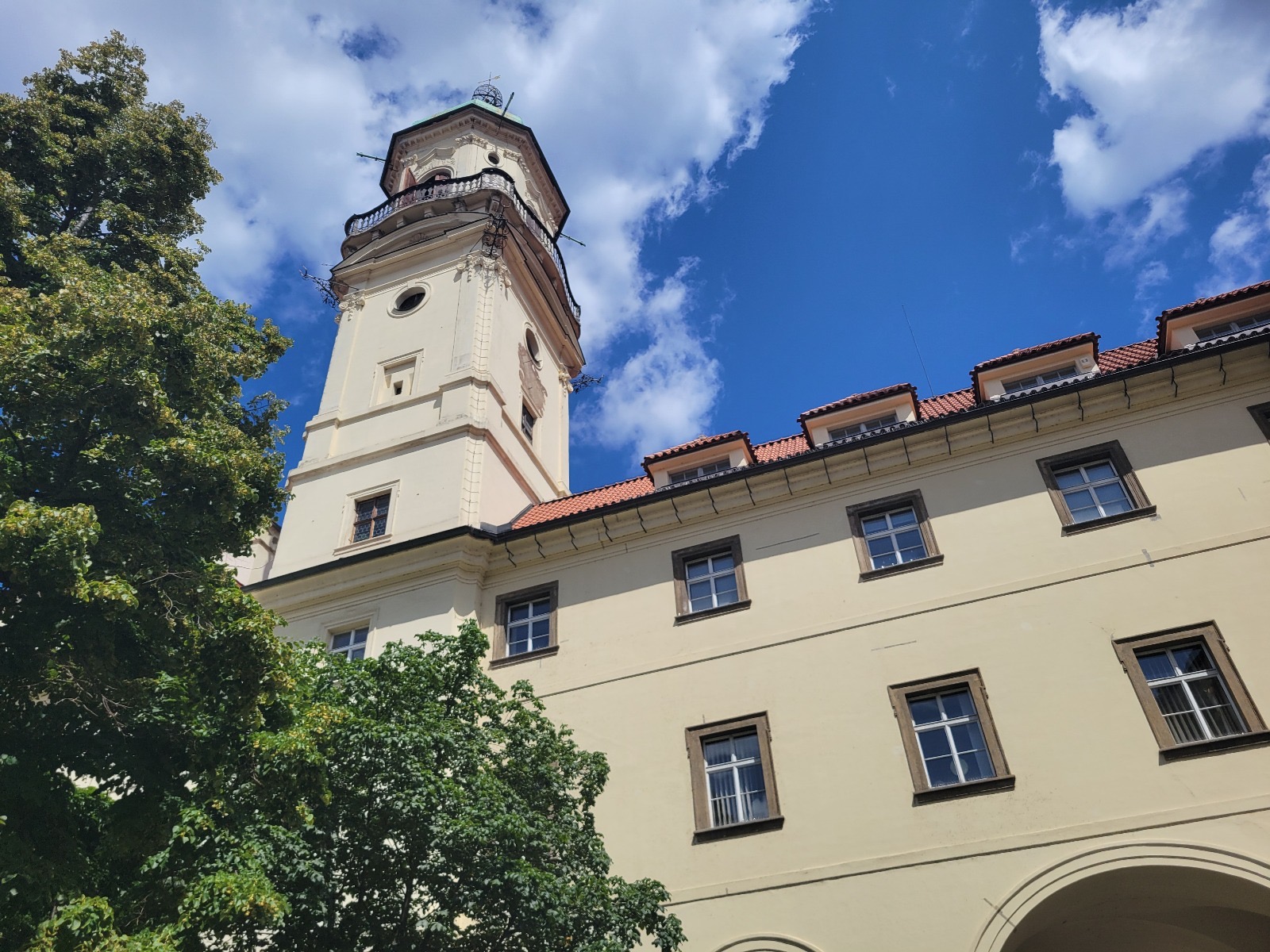
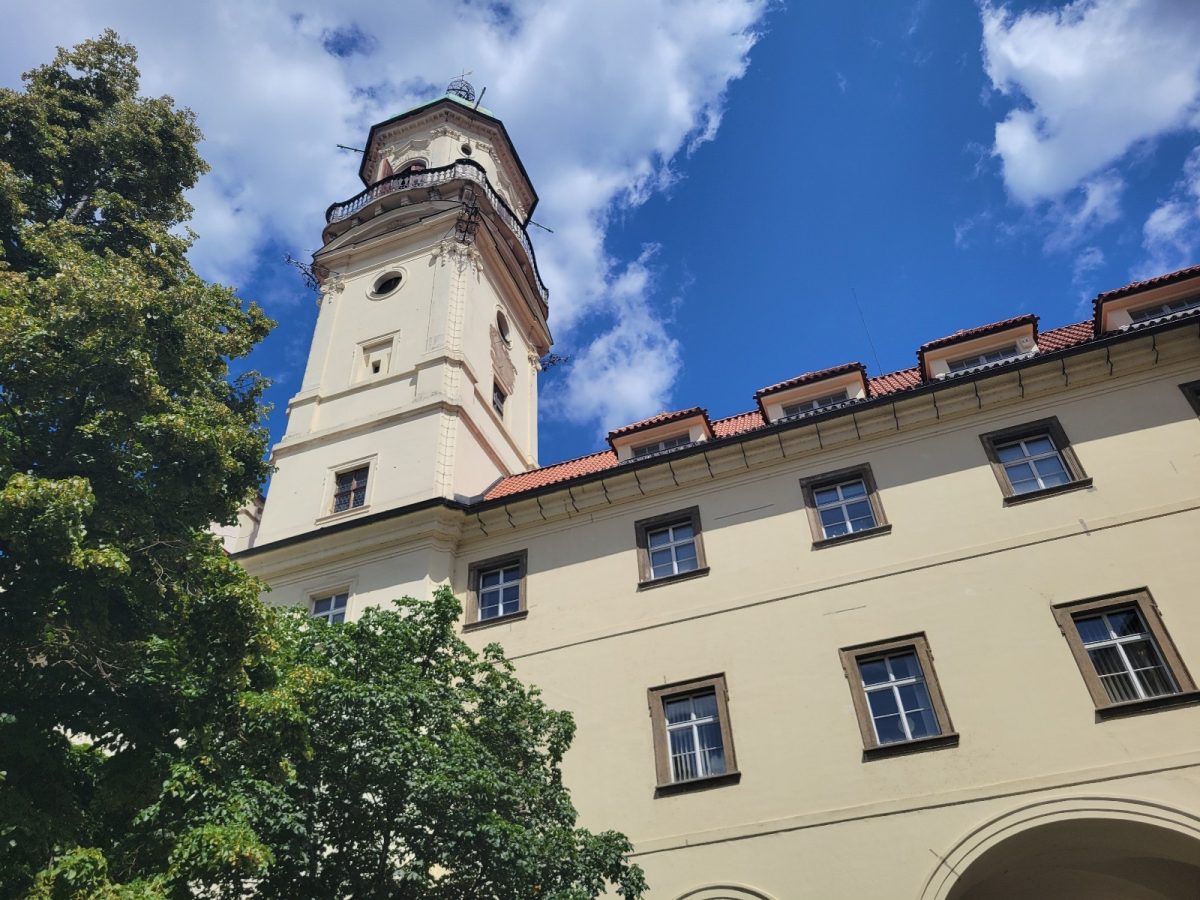
We have something special to share about the Nightwatchbear’s location from this
week! A special exhibition recently took place at the Klememtinum regarding its rather
unique meteorological history. For example, it has at different points been surrounded
by haze from an Icelandic volcano, been below freezing for 62 days straight, and been
partially flooded by the Flood of 1824!
Given these and other events, the Klementinum is dedicated to researching weather
forecasts, upcoming natural disasters, air quality, and the ozone layer among other
things. They even record things such as the arrival dates of birds migrating back to
Prague during the springtime. However, even their research is not safe from their
unique location. When comparing their temperature data with their counterparts in
Vienna, researchers at the Klementinum found that before 1835, the Klememtinum was
consistently recorded to be about half a degree hotter than the other research station,
and the reason why is a mystery to this day.
Most measurements, such as rainfall, wind direction, wind speed, and solar radiation,
are taken on the roof of the Klementinum. However, to remain consistent with years and
years of data, temperature is still taken in a small metal box just outside a window on
the first floor where the sun rarely touches it and cannot interfere with data. It finally
ended up in this spot after having brief stints at Josef Stepling’s flat, the Astronomy
Tower, and Antonin Strnad’s flat. Even once arriving in its general current location, it has
still alternated between the first and second floors. Although all these instruments have
been fully automatic since 2012, they still must be cleaned to get rid of any dust, dirt,
bugs, etc. that might interfere with data or data collection.
The Klementinum has not just conducted meteorological research. In the late 18 th
century, it was home to the Mathematical Museum, the first museum in all of Bohemia
open to the public. It served to educate not only its own Jesuit students about science
and mathematics but also raise interest in those subjects among all people. The
Astronomical Tower has also been famous since this time; every day from 1842 to 1929,
a flag was waved from the tower when it was measured to be noon, which became a
popular daily event among the people of Prague.
2025 is quite a special year for the Klementinum. This year marks 250 years since the
Klementinum began its weather observations in 1775. It also marks 200 years since the
Klementinum and Prague City Hall began working together measuring the water level at
the Old Town Mill following the Flood of 1824, and it marks 150 years since the
Hydrographic Commission and Hydrological service were established to ensure rainfall
and water-gauge observations following the Drought of 1874. Personally, the plague
doctors among our group are glad it exists because of its medical studies, because
without them, well… we might not know nearly as much about the Plague as we do
now. Want to learn more about plague? Join us on Plague doctor tour and we tell you everything!

Comment (0)